I decided that out on a couple of walks, to practice on shot types and put together a video using iMovie. This was extremely helpful to me as I was able to practice tracking shots, something which I felt I needed to improve on.
Colour Theory
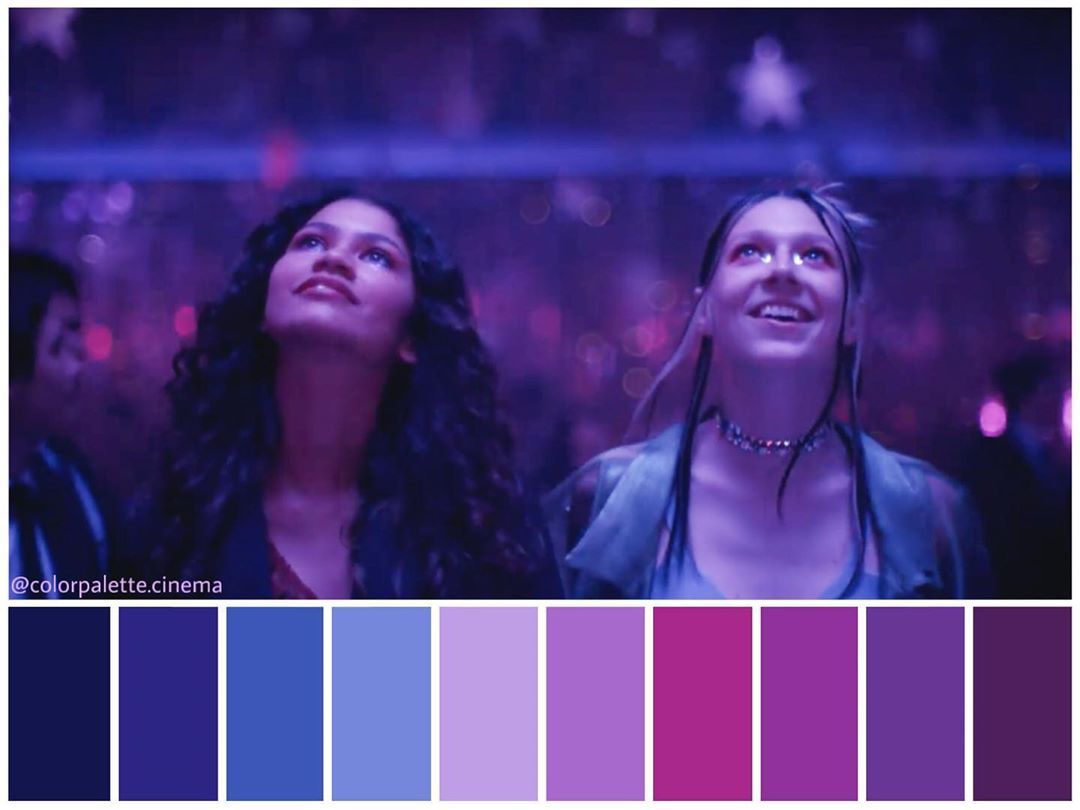
As I plan my FMP, I wanted to research into the effect of colour in film and how it is used to create a psychological effect on the audience. I came across this video on studio binder.
https://www.studiobinder.com/blog/how-to-use-color-in-film-50-examples-of-movie-color-palettes/
This video explores the different key elements to colour such as Hue Saturation and Value which I found interesting on how colour can make such a difference to a frame. Also, how each colour represents a certain feeling.
I plan to make a video that is vibrant and fits to the complementary colour scheme. With the possibility of using a strong light source to create the feeling of the film.
Tate Modern
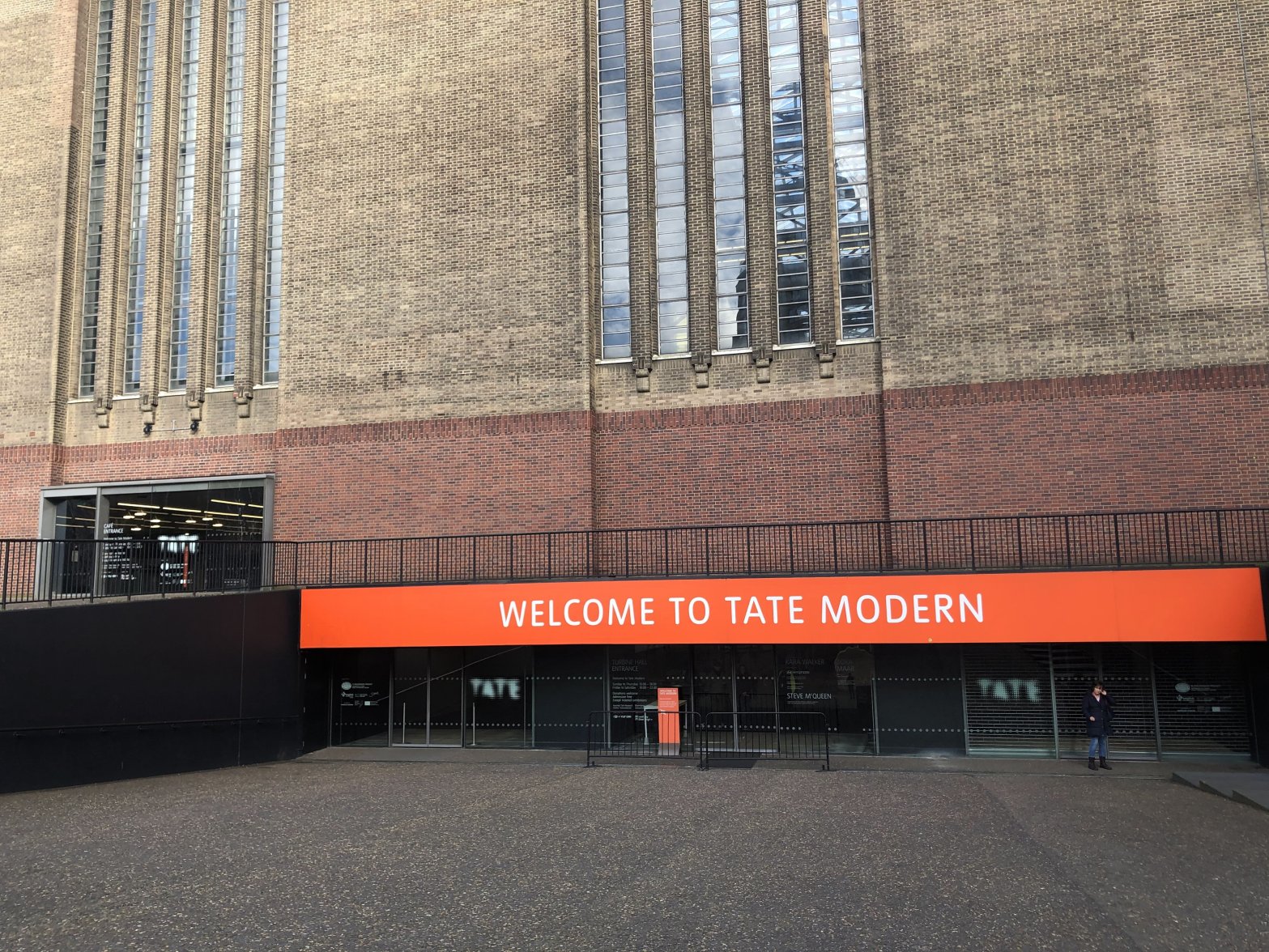
I managed to visit Tate Modern recently, I find that exploring Museums helps my creative side progress. Immersing myself within contemporary art and finding what I like and can be inspired by.
Here are some work I found interesting..
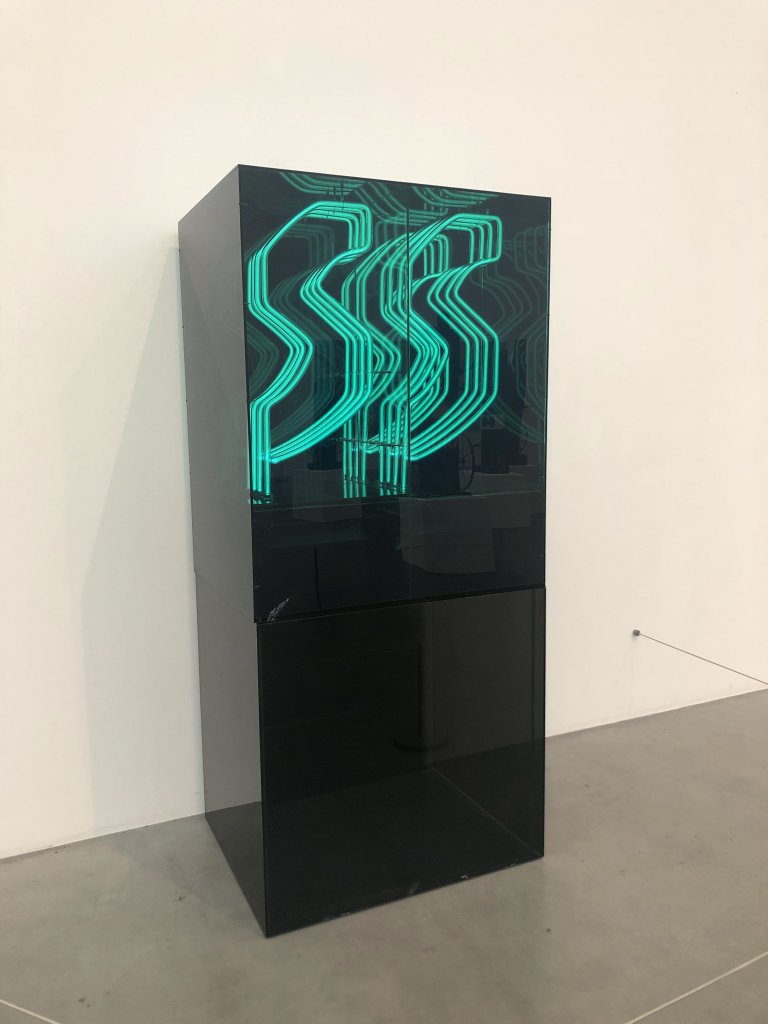
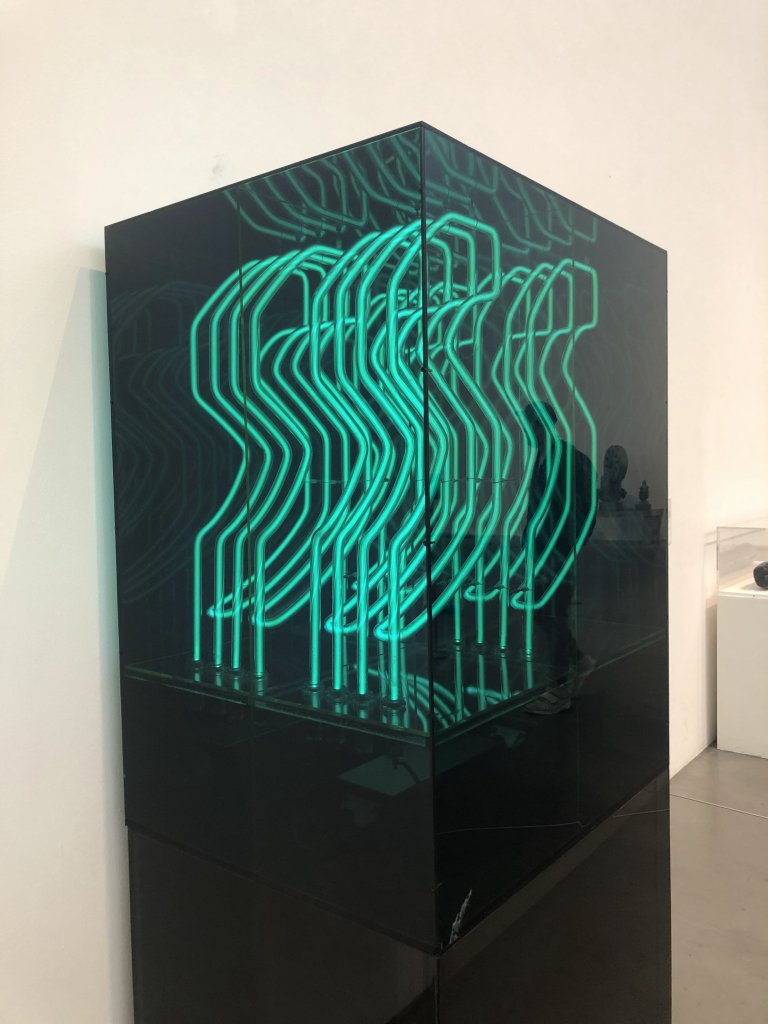
Chryssa (1933-2013) “Study for Gates No.4 1967”
Chryssa was one of the first artists to use neon, previously just an advertising tool. She moved to New York in the 1950’s and said she was inspired by Times Square “with its light and letters”. This work is made of sixteen blue neon forms housed in a grey Plexiglass structure made to resemble the night sky. The repeated forms are fragments of the letter ‘S’. I really liked this piece and how it is structured, the neon lights creating so many different dimensions makes this piece one of my favourites.
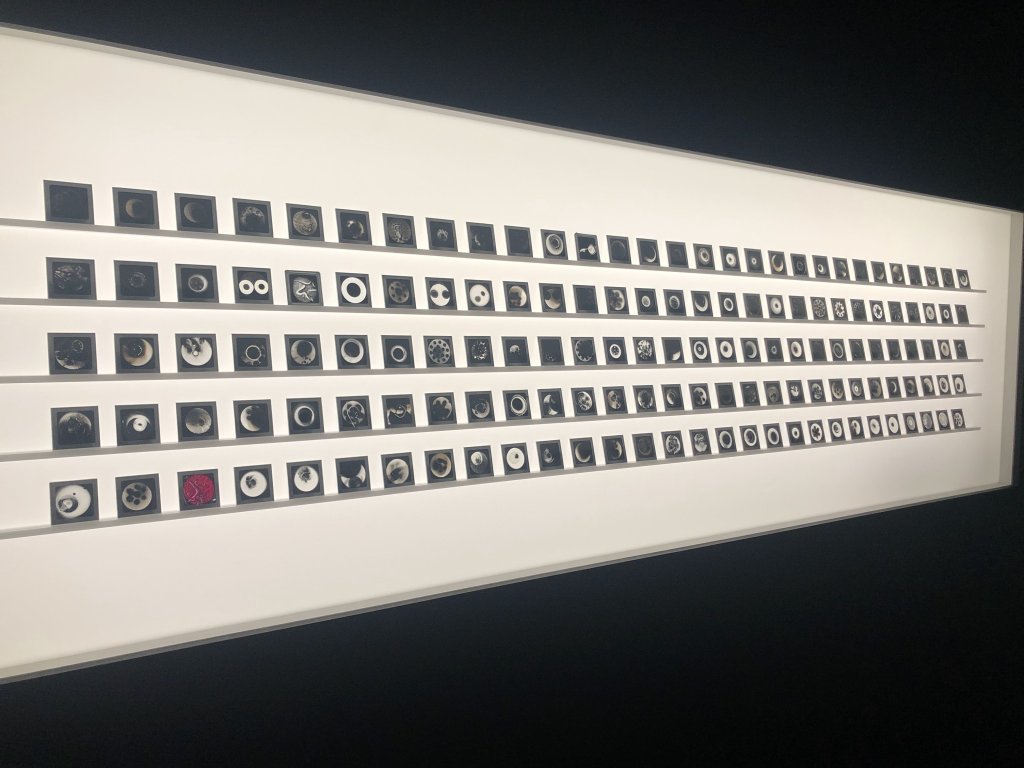

Aldo Tambellini (1930) “Cell Series 1965-8 (digitised 2018)/ Cell Series 1965-8”
Cell Series is an immersive projection of digitised versions of glass sides. A selection of the original sides can be seen in the adjacent light box. The slides were painted black and scratched, pierced and burned to create a range of abstract images which suggest cellular and cosmic forms. Tambellini would project the slides onto the sides of buildings , or use them as part of immersive, multimedia performances in collaboration with dancers, musicians, and the Umbra Poets, a group of African American poets. Just looking at this piece, I found myself wondering how I could maybe use projections in my FMP and the process of creating one, the effect i imagine it has rather than just using lights is interesting and i would maybe like to explore this effect.
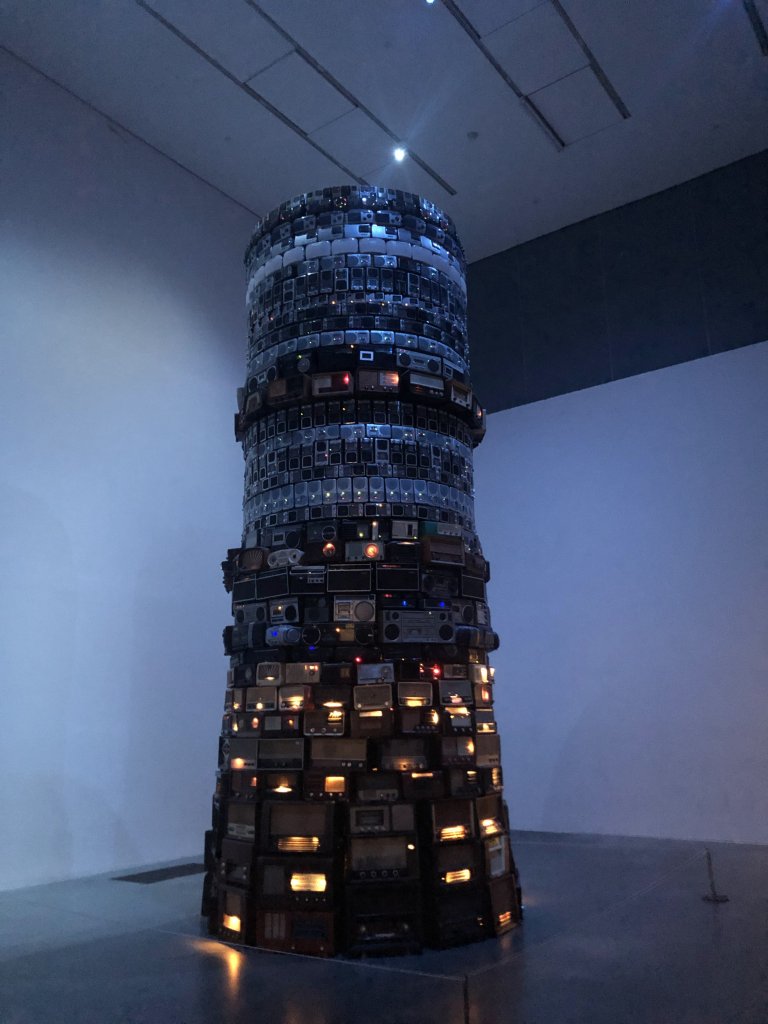
Cildo Meireles (2001) ‘Babel’
A tower of radios playing at once, addresses ideas of information overload and failed communication. Cildo refers to Babel as a ‘tower of incomprehension’. Comprising hundreds of radios, each tuned in to a different station, the sculpture relates to the biblical story of the Tower of Babel, to a tower tall enough to reach the heavens. God was offended by this structure, and caused the builders to speak in different languages, No longer able to understand one another, they become divided and scattered across the earth, and so began all mankind’s conflicts. This sculpture was made entirely out of different models of radios dating back to the early 1920’s to the models of today. This was totally atmospheric and greatly interesting to see. The most fascinating part of my whole visit was looking at this work.
Meeting with Kitchen Street/Future Plans

I visited a second location due the the fact that my original location idea was looking very unlikely as the woman i was in contact with regarding using the space had stopped contacting me. I looked into other venues around Liverpool and heard about 24 kitchen street from a friend. I then went on to email a guy called Ioan who deals with the events management to enquire about using the space for my project. He advised me that the venue was open weekdays 10am-6pm and he would be available for a meeting within that timeframe.
On Thursday the 12th March, I visited 24 Kitchen Street to discuss plans for production. During this meeting, Ioan advised that to use the space would cost £25ph to hire out.
Although in the meeting i felt Kitchen street fit the vibe of my project, I would now have to consider this factor of paying to use the space. For my project I explained to Ioan that I would need 4 hours over two sessions which put the price up to £100. I then negotiated with Ioan and explained that it is a college project and I would bring all of my own equipment so i would soley just need the space without any further requirements. From this Ioan said that he could do £100 for both sessions which was fantastic yet also still provides me with the issue of getting the money together from my own sources to film in this space. I was not able to complete a full recce on this day as construction workers closed off the space I plan to use.
After the meeting, I left feeling perplexed and unsure on what to do. Since the meeting on Thursday, Kitchen Street has had to close their business for one month due to the coronavirus outbreak which has pushed my plans for production back to now the end of April, which is feel is dangerously too close to the deadline of this project. From today I am exploring other options for venues for my project and understand that during this time it will be extremely uncertain to secure a definitive date to film. However, I will still keep Kitchen Street as an option in the hope things clear up soon.
Lighting Session

This session’s focus was to take some tips from lighting techniques through three point lighting and how to light a scene correctly within films and/or documentary’s
We began the session by making notes on these tutorial video’s introducing tips and advice on how to create a mood and atmosphere using light. This first video by FilmRiot explores the different ways you can create a mood with using one light and how bouncing the key light off a reflective surface or subject can enhance the scene in the way you want it too. I feel this video was very informative as it practices these techniques and physical shows you the effects of reflective lighting. it also demonstrates how light effects the mood of the scene, for example they show the effects of having a black material to absorb the key light can create a tense and mysterious shot in contrast to what a white material can do the enhance the quality of someones features.
https://www.bbc.co.uk/academy/en/articles/art20190814164819662
This video talks about the introduction to three point lighting, which not having much knowledge on lighting equipment prior to this was super helpful. It goes into detail about how each light has its own necessity to a frame, the Key frame being your key light source for the subject and positioning it in a way that complements the subject and the shot, The Fill light which is used to create or remove shadows of the subject by having control over the contrast and the Back light which add’s depth and another dimension to the subject. All of these components are used commonly in a documentary interview style set up, to which is not relevant to my project but it has broadened by understanding of lighting a subject and the techniques used in terms of where to place the lights is very constructive for me.
The final tutorial we discussed was another short from FilmRiot, this time introducing basic lighting techniques and to gain more understanding on why certain light set up’s are used. We learned about high-key and low-key lighting and the presence of each in films and genre’s for example high key lighting is more commonly used in comedy films and studio tv productions this is used to light the subjects in their entirety with no shadows for emotion. Low-key does the opposite by using this in thrillers and horror films it sets the tone of the film using lighting alone and creates mood and setting. What I also found interesting was the triangle shape you can create with lighting on the face and how its actually really common in film to this day, going back to Rembrant the Dutch artist who would use low-key lighting for his paintings, it shows how this shadow on the broad side of the face can create more definition.
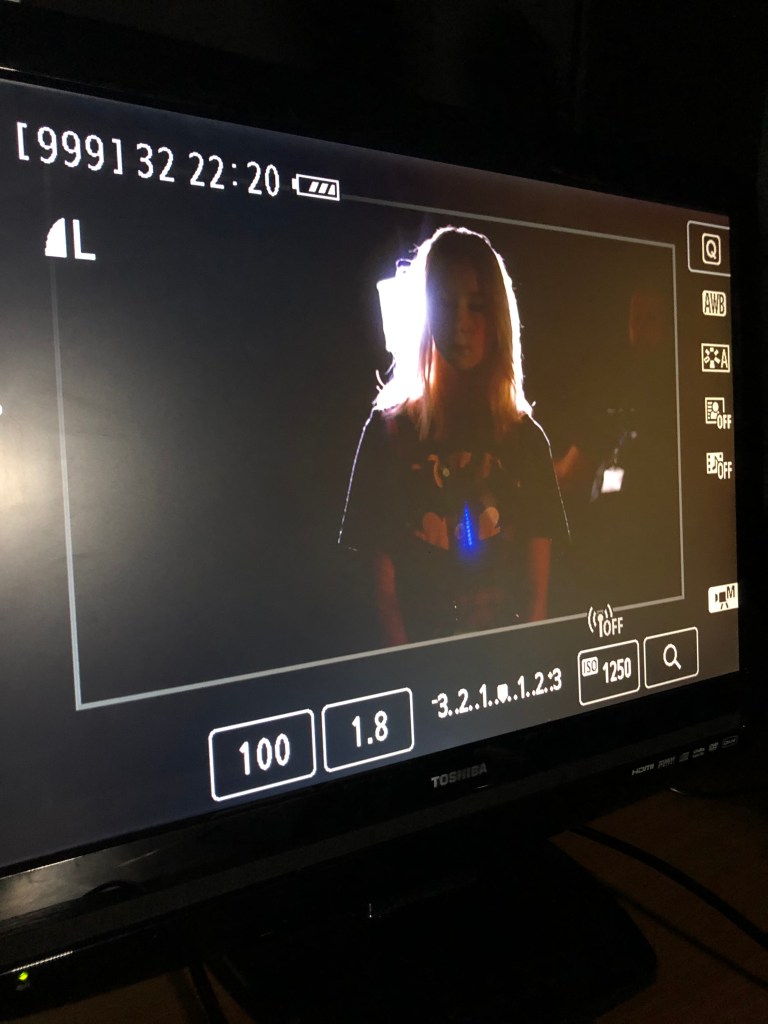
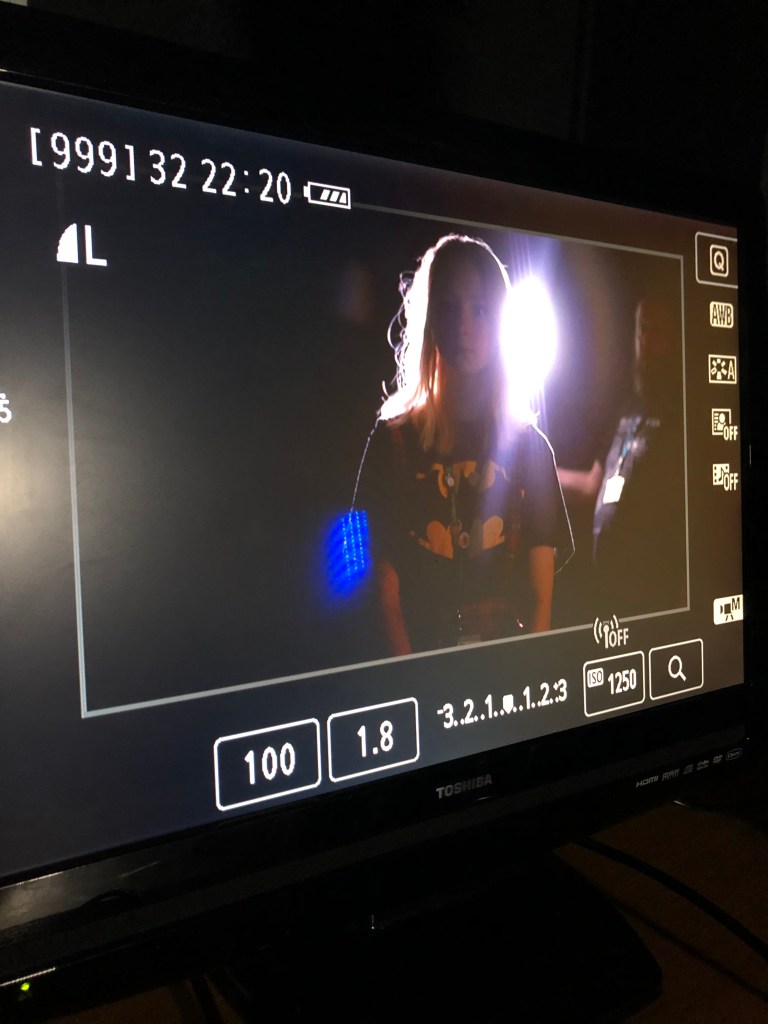
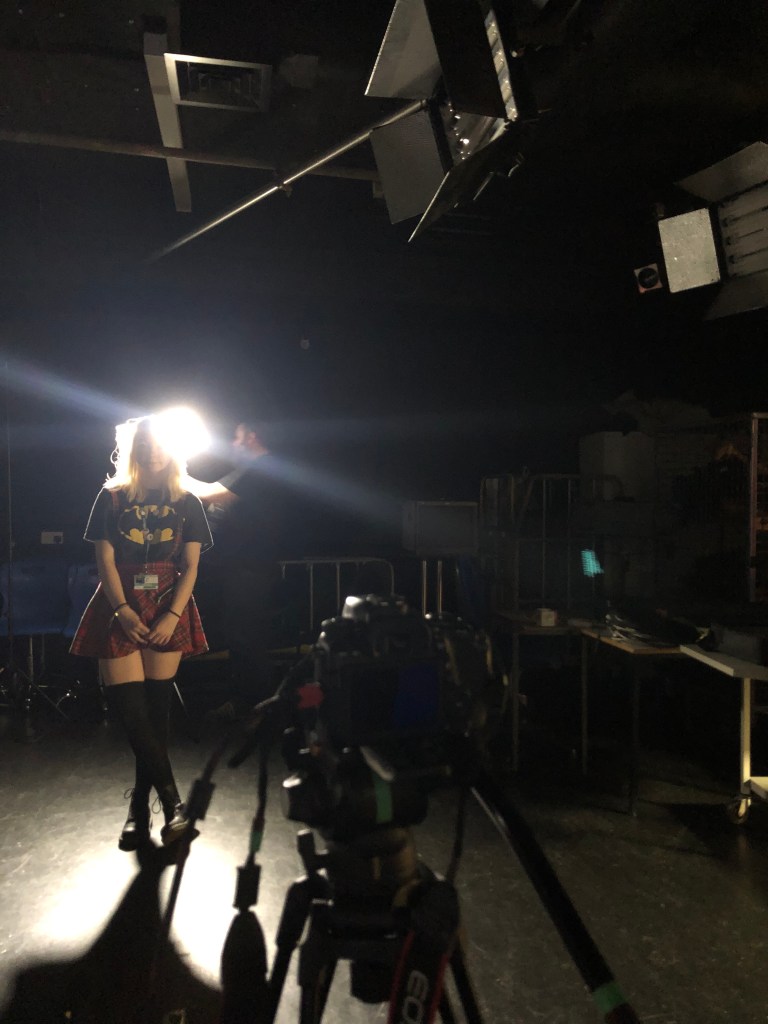
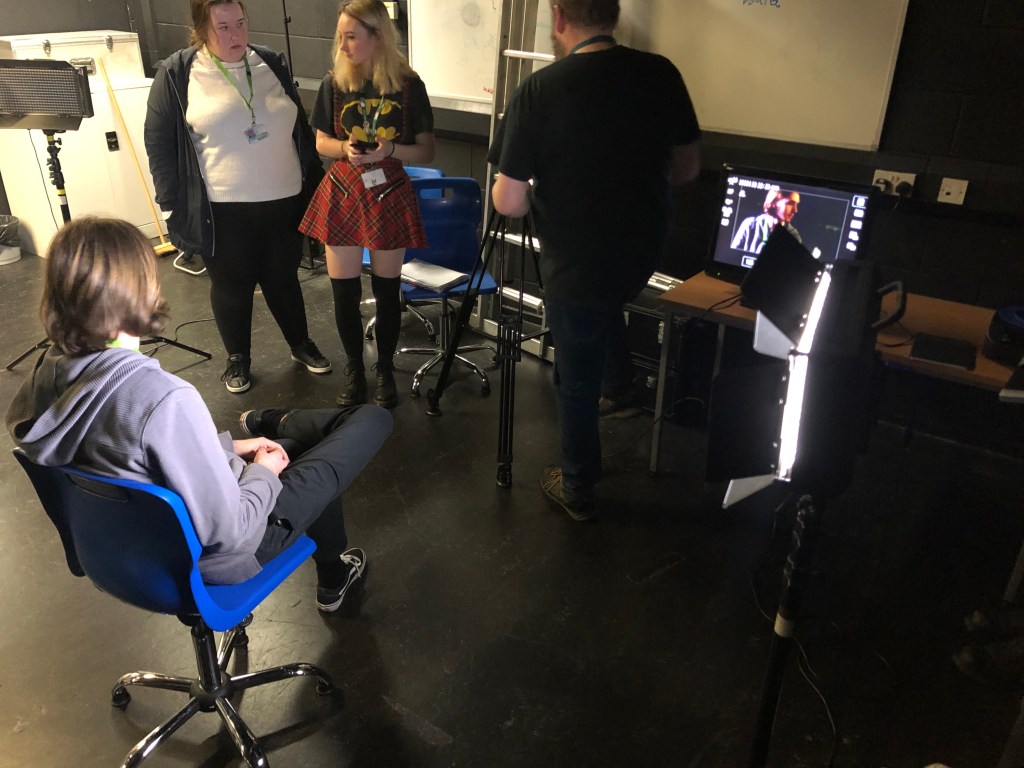
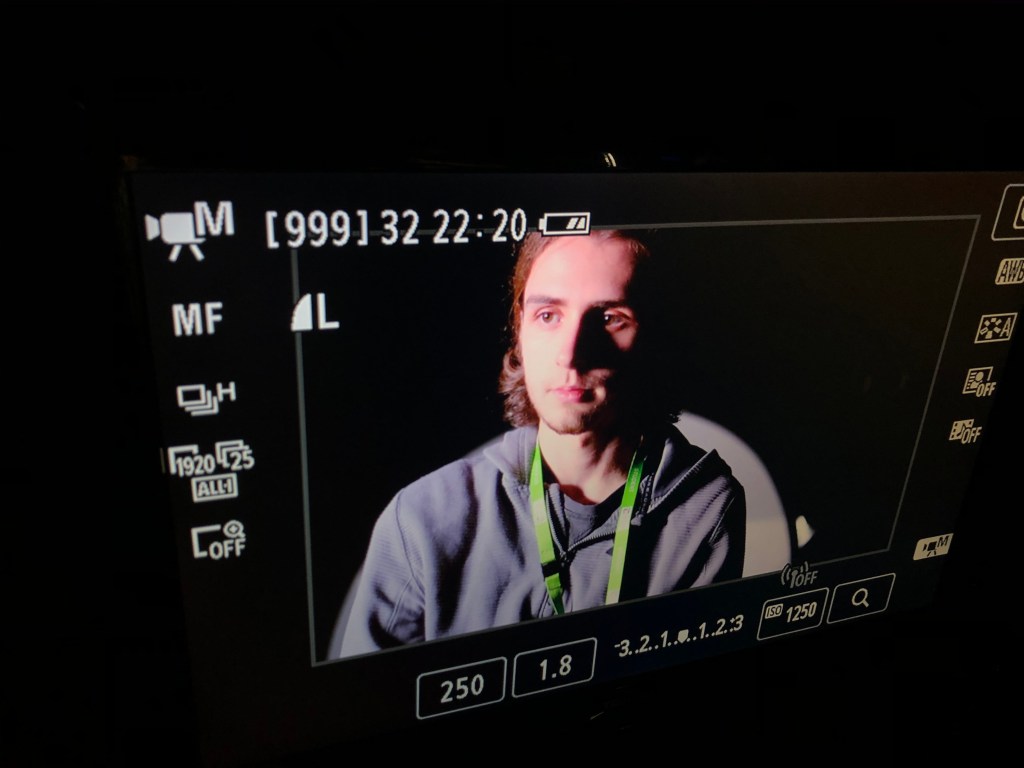
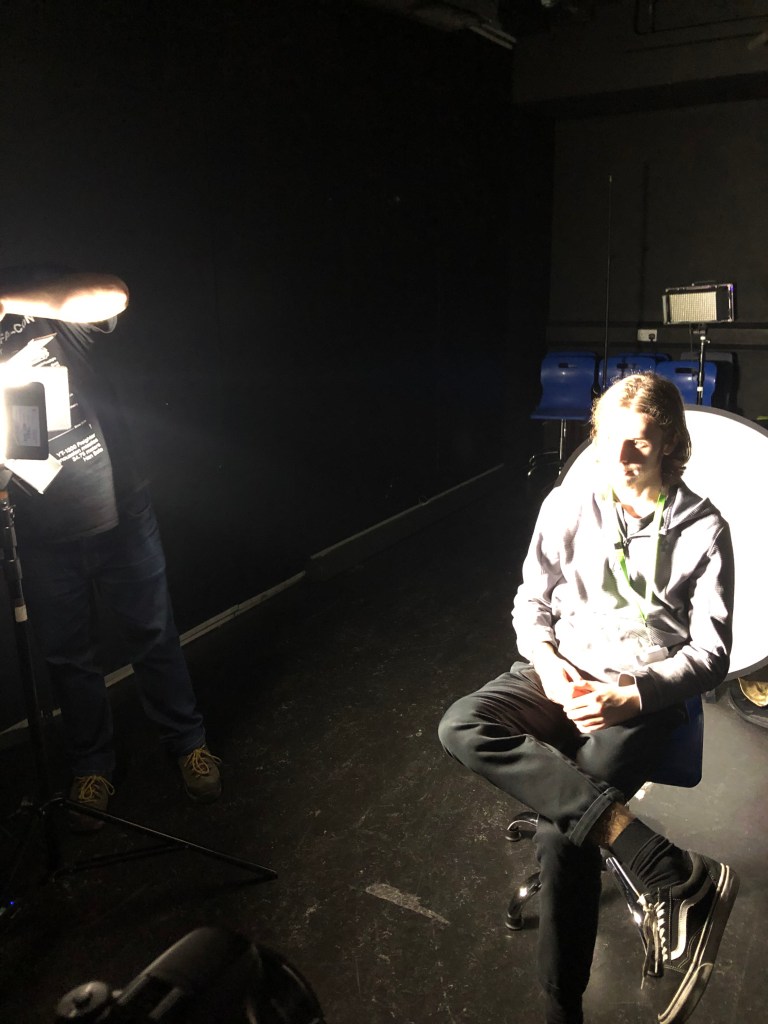
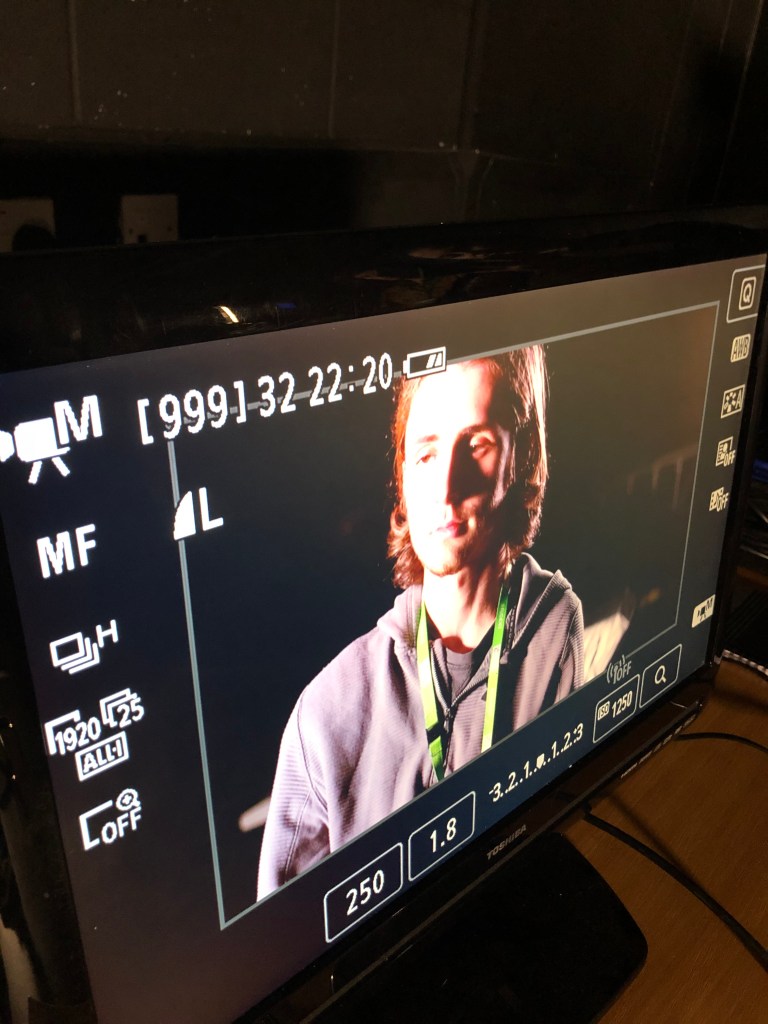
Later on in the session we got to practice these lighting techniques in the TV Studio, we got to try out Backlighting and three point lighting and the importance of it.
I enjoyed this session a lot as I will be working very closely with lights for my project to create a visual illusion and learning the importance of lighting a scene or subject.
Feedback-Project Proposal

From writing up my project proposal, I knew i still had a long way to way in terms of researching relevant themes and coming up with a topic to explore for my project. I already have the idea of using dance and what lighting i want to use and where i would like to film but I am still missing the theme, how am I going to tie everything together to a theme.
Having now got feedback from Jo, which was to really work on a theme. I had picked up on the film “Victoria” which we watched and analysed as apart of our European Cinema sessions. I explained to Jo that listening to the song i have chosen makes me think of a scene in that particular film and the culture behind underground techno subculture. Jo then asked me to think of the themes within that film, identity, connection, finding a place in the world. This was extremely helpful in guiding me towards a theme for the project as I had struggled to make sense of what I wanted to achieve.
Moving forward I will be exploring the identity and connections as themes and see what works best for my project. I feel that these are the best themes as I feel music and dance combines, how people feel when they listen to techno music and what brings everyone together. With identity, I plan to go off maybe the character in Victoria how she struggles with identity and look into her emotional journey and maybe adapt that into my theme.
Music
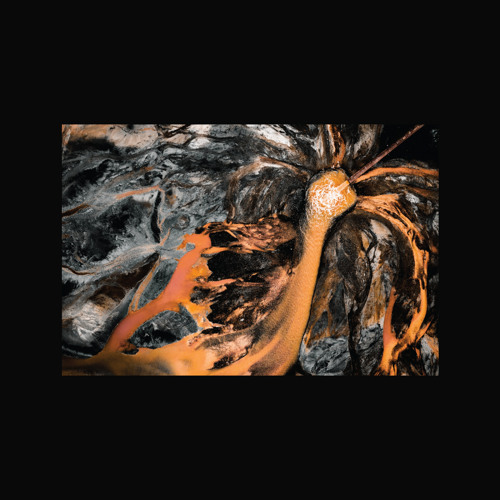
I decided to go with the track from Synth of Life called “Time”, this song is signed to my friend’s music label “Suah”, This track I strongly feel fits the aesthetic I am going for, Suah focuses on melodic techno music and discovering artists that achieve this new-sound.
Heres a statement from Suah regarding the song,
“Synth of Life – Time As label owners and DJ’s, our aim is to think into the future. We want to sign music that is timeless, that doesn’t age – music that doesn’t fit into a genre. The irony is, the track is called Time so the connotations prelude that it ages; we thought the opposite. We were attractive by the sheer depth of the track. The synthesis used to compose the main lead is very simple but so emotional and the track is made to make you think. In melodic techno, the focus is not the drums, its the melodic sonorous and harmonic value that give something a deep sound. Synth of Life has achieved just this.”
I plan to show this song to my dancer and plan choreography to this track, and also direct what shots I plan to achieve.
Initial Pitch for FMP/Feedback
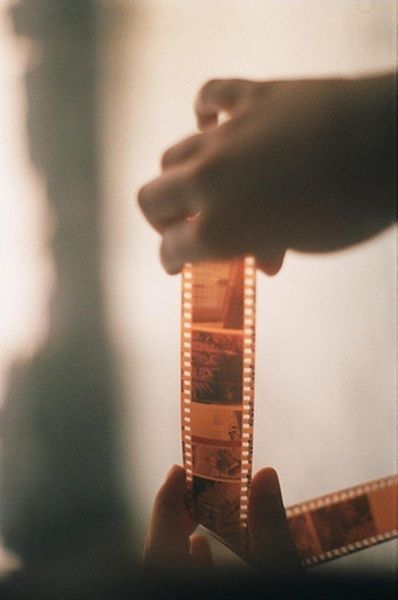

It was time to Pitch our ideas for our FMP, at this point Jo wants us to have a clear understanding on what path we want to go down, to also see if Jo has any help or advice on how we can create our visions.
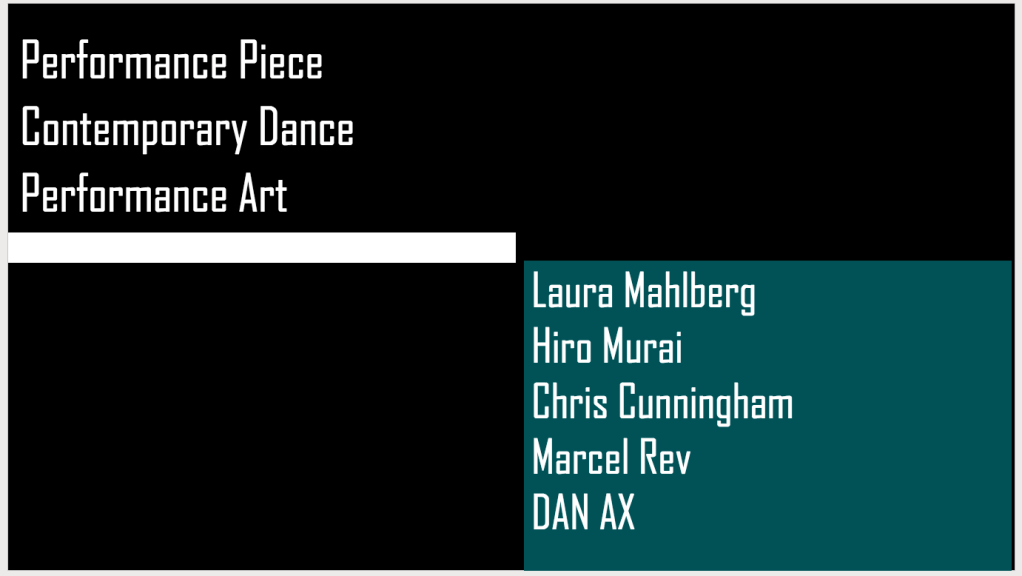
I had already introduced this idea to Jo about it being a performance piece, but this was to show who i had been researching. These are the types of directors and cinematographers in the industry who’s styles I have most been inspired from. Ranging from the progressive artistic videos from Laura Mahlberg to the experimental artistic directions of Marcel Rev and Hiro Murai. I have not settled on a title or theme yet so I explained to Jo that i’m not sure what bracket my video will fall under
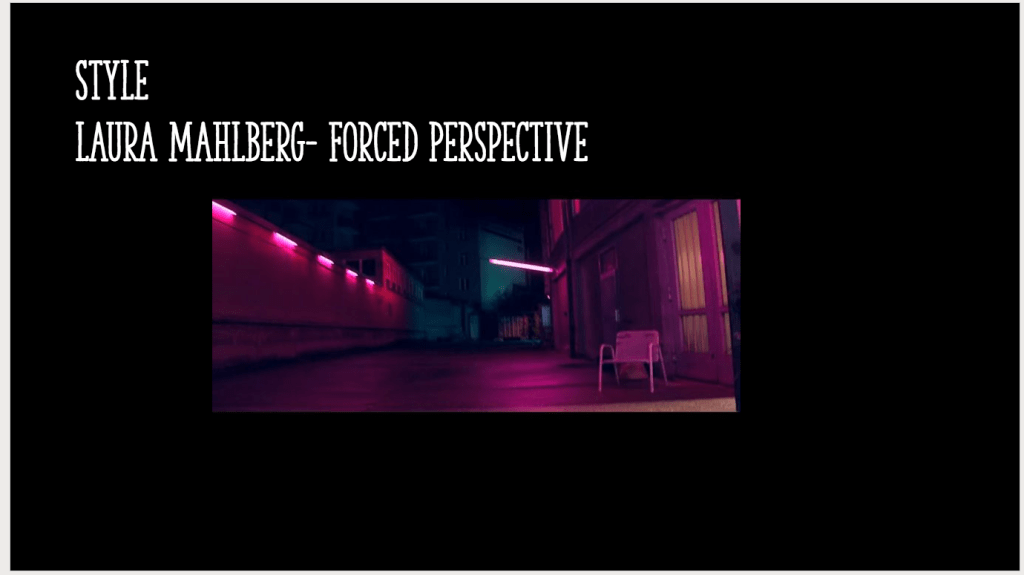
Having been inspired from the work of Laura Mahlberg i chose to introduce her fashion short film “Forced Perspective” as it captures the essence of style I’m looking into. Also, the location of the video is similar to the location I am planning to use, with a similar lighting technique. Jo, then asked if i had the location secure yet to which i explained I am in contact with the woman who have me access last time and I had verbal confirmation I could use the space for this project.
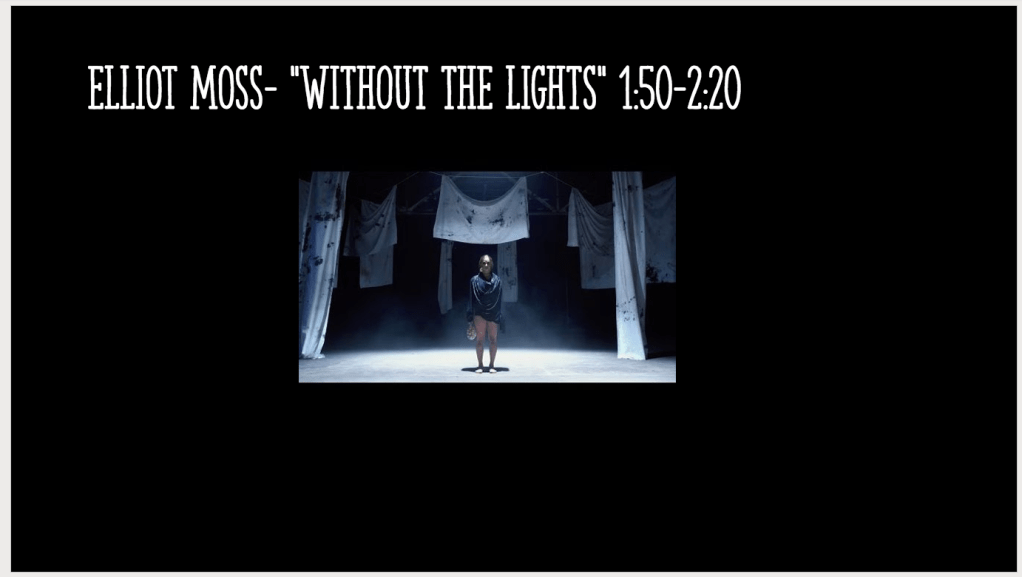
This slide was to show Jo the camera techniques used when filming a dance piece. This music video was definitely helpful in my understanding on how to film the pace of a dance and still retain some artistic and technical aspects. Also how dance tells the narrative using props, costume and overall the choreography.
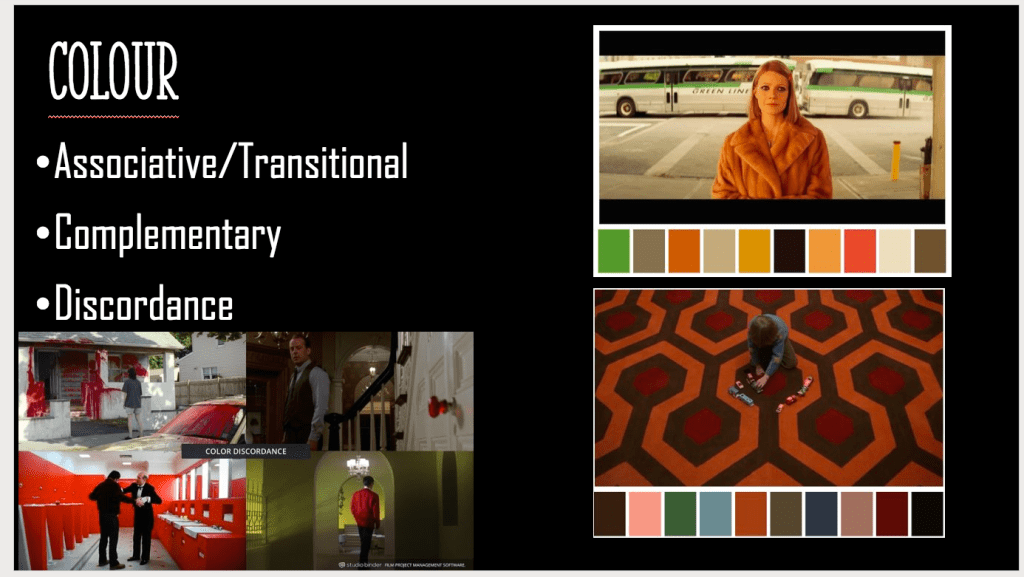
I then wanted to explain my research into colour theory and grading. From watching a very useful video from studio binder about the use of colour in film I had been researching into how colour enhances a scene and how I want to maybe experiment with colour in my project whilst using the lighting and through post production. Jo had advised at this point to speak to Simon the technician on some lights I can practise with to achieve this goal.
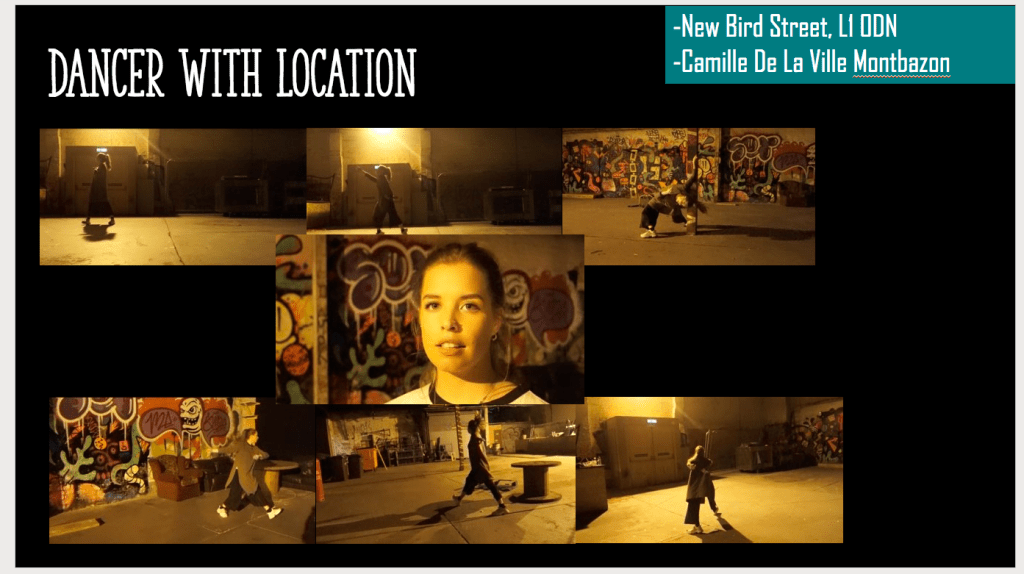
As I haven’t been able to visit the location for a recce, i decided to include the footage from a rehearsal that i had with the dancer just shy of a year ago. Jo could then clearly see that I had been in the space before and worked with the dancer.
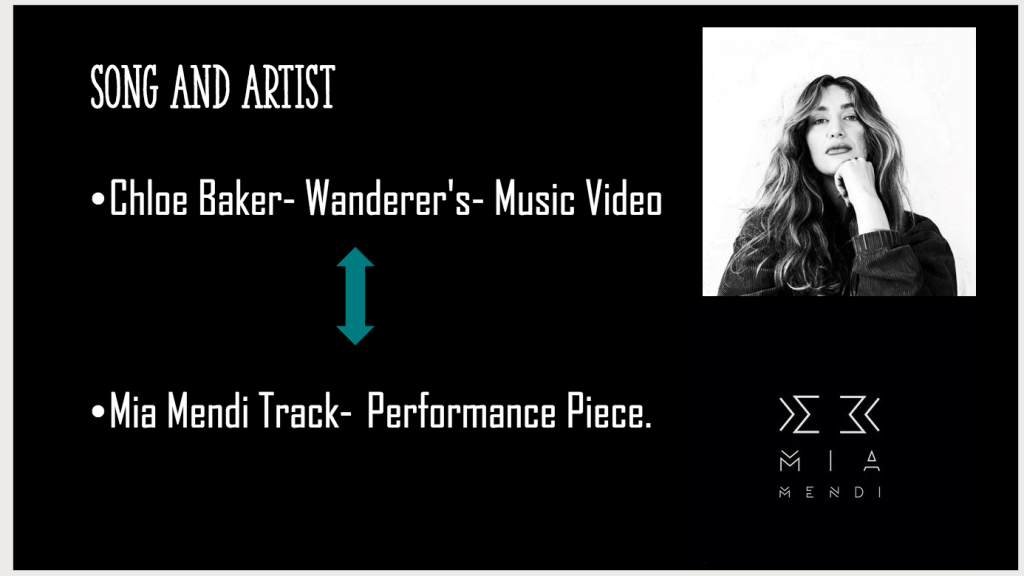
These are the two avenues I have up to now, I could work on a music video with a client Chloe Baker and essentially alter my idea to fit a music video. However, I also have another idea to use the minimalistic techno tracks produced by my good friends Mia Mendi. I explained to Jo that i am in contact with both parties and they are both on board with the project and are willing to give me the permission to use their music. Jo advised at this point that on the basis of my research i am more into to progressive film styles like Laura Mahlberg and also with my lighting ideas it would fit the concept more rather than the music video. After that, I reflected back and thought what a good point that was, Jo is telling me with Mia Mendi’s music I have more creative control than i would possibly working with a client.
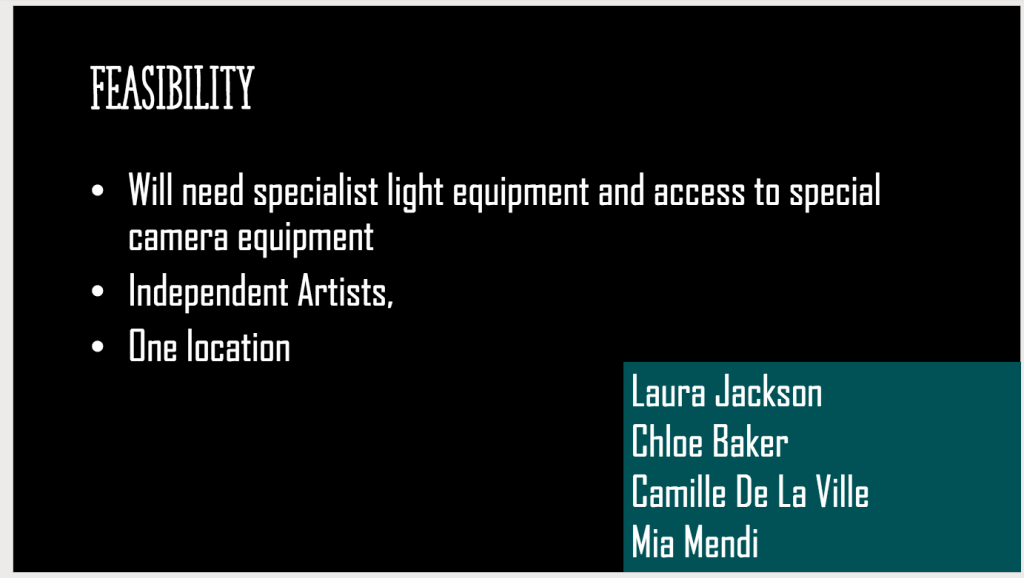
I wanted to include in my pitch everyone i was in contact with up to now to show the feasibility of the project and also to explain that i am interested in working with independent artists and collaborating during this project.
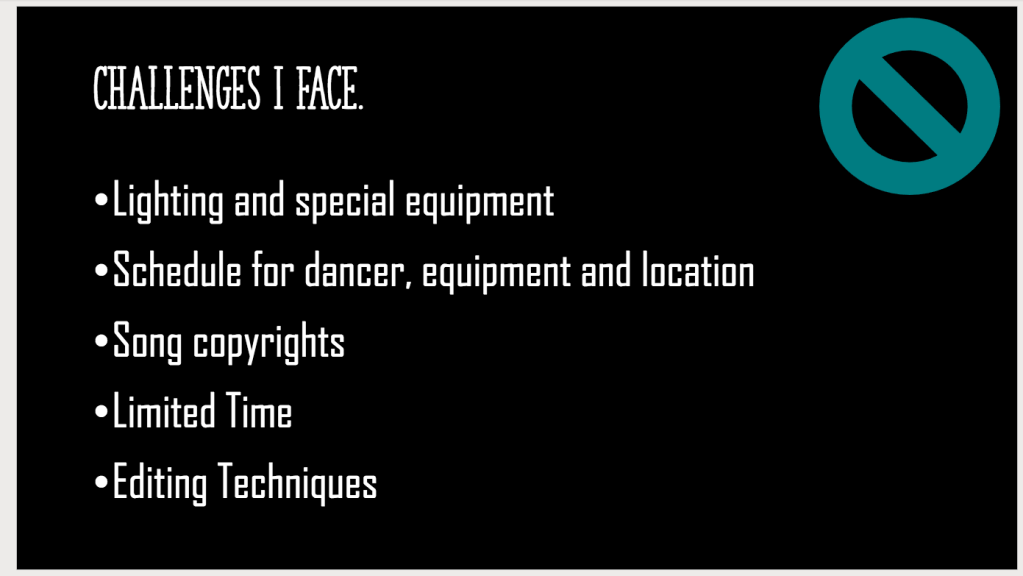
Where I am up to in my FMP planning, these are the challenges I wanted to inform Jo, i am facing and could face during this process. To which Jo advised to start planning a recce of the location as soon as possible to ensure I can use the equipment and also plan a schedule around when i can start production.
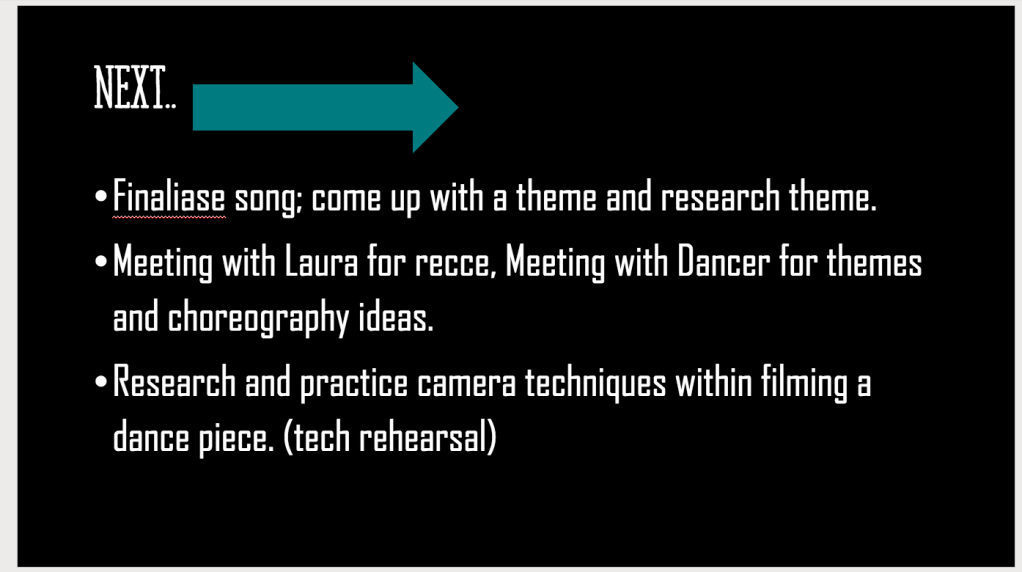
At the end of the pitch, Jo’s feedback was positive about the idea. Jo now wanted me to look into getting in touch with the woman from my location and setting up a meeting in the space as soon as. Also, we went to speak to Simon and explained my ideas for lights and special camera equipment. Simon put me onto the art technician Paul Skinner to discuss what lights I could possibly use for my shoot to experiment with.
Foley Sound Session
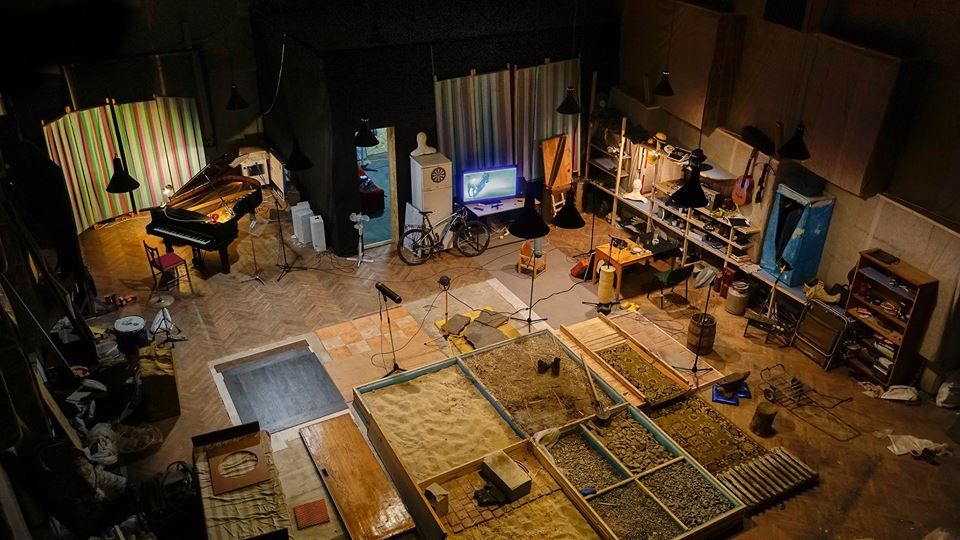
During one of our sessions with Phil we looked into the background of foley sound and artists and how it is used in films, documentaries and animation.
Throughout this session we explored the techniques that foley artists use to create the sound effects to match the action on screen and how foley amplifies the sound.
We watched “The Secret World Of Foley” directed and produced by Daniel Jewel. During this session because it gave us an understanding of how foley artists really work. I liked this film because it demonstrates the talent and precision that foley artists need to have, the attention to detail was incredible to watch (listen to). It opened my eyes to how much work goes into the sound in a film using foley. I particularly enjoyed the part where the fisherman catches the fish off the boat and the foley artist uses what looks to be a piece of moulded clay to match the sound of the fish flapping about out of water.
Next, we explored the use of sound design in film. How it is used to drive the narrative working alongside camera movement. This video we watched (listened to) is from the film “Munich” directed by Steven Spielberg and Ben Burtt the infamous sound designer. This video is interesting because it explores the use of pinpointing the diegetic sound in the film and amplifying it to tell the audience what to focus on. I learned a lot from this example about what taking sound out of a scene can do to the audience and almost the plain fact of how removing the sound has more of an impact to the narrative.
For our task, we were asked to watched this clip from the movie Wall-E without playing the sound and try and guess how many sound effects we think we should hear. Initially I reached 24 sound effects from focusing on how Wall-E (a robot) would sound, going right down to the mechanisms and movement, to the wind from the rubbish blowing around in the atmosphere of where it is set. Once we had all completed our estimates we then returned to the video and listened to it with sound. My estimate had doubled immediately. This was a very useful task as it challenged me to watch closely and pay attention to every detail as a foley artists have to do to re-create the sound effects.
However, what I found most helpful in this session is how sound works in film and how powerful it is alongside the narrative and camera movements. I will continue looking into foley sound to try and maybe incorporate it somehow into my FMP. As im working with music it will be interesting to explore more techniques and develop skills with sound going forward.
Feedback Week One.
This feedback was initially to discuss my research and what topics and/or ideas I had for FMP.
Discussing through my research there was a lot of commonalities in what I chose to research, mostly an artistic approach such as listening to an album to try and explore ideas of themes and styles of filming through looking at McQueen and Made of Stone.
Jo and I then discussed a couple of ideas, one being a drama that was narrative and dialogue driven to which Jo introduced me to a film called ‘Festen’ a film that uses Dogme 95 to which follows a secret in one location. This interested me because Dogme 95 follows strict rules in their filmmaking such as all shots must be hand-held, which is something id like to explore as I admire the raw filmmaking style.
My next idea was more of visual narrative about a hit an run. This would challenge me to work with special equipment and colour grading as well as creating a believable story with little to no dialogue. Jo explained that that would be fees-able as id only have to work with one actor and could explore more techniques in pos-production to make it look interesting. However. creating a narrative with suspense comes with its difficulties and I would have to really research into films with the same idea.
My idea for a dance piece is something I feel I could really work with, as i was explaining to Jo my idea for a performance piece she explained a film created about the Royal Ballet’s piece called ‘The Cellist’ and how performance art is interesting to a viewer.
When I discussed my idea to Phil the following day, he wanted me to focus more into what my theme would be and how a location and dance piece would fit to a theme, I explained i was waiting on my artists song to decided what theme I wanted to focus on.
Overall the feedback was very helpful with Jo and Phil advising me to play to my strengths and to look into different themes and styles regarding contemporary dance pieces. I will start to look for themes and styles to fit my piece my sketchbook for visual inspiration and updating my blog of any useful content that will help me develop an in-depth understanding of what I want to achieve.
 Meg's FMP Blog